From the foundations of Luo collective organisation to the post-Raila era, the community stands at a historic crossroads. Its enduring unity must now translate into institutional strength, economic transformation and a clearer vision of its place in Kenya.
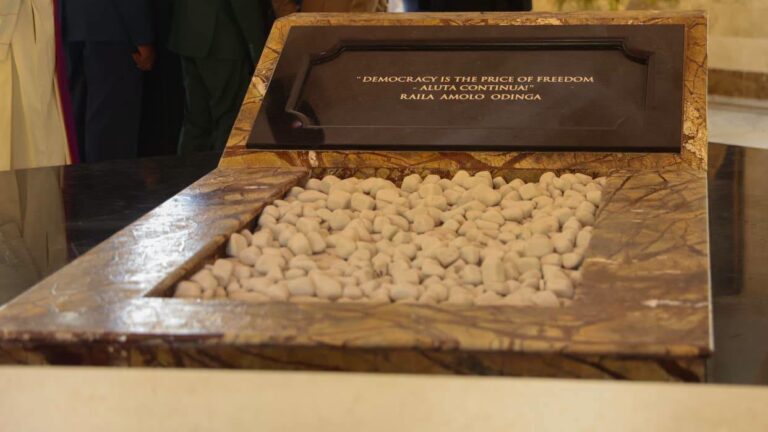
On October 15, 2025, Raila Amolo Odinga died in India, bringing to an end one of the most consequential political careers in Kenya’s modern history. His burial at Kang’o ka Jaramogi in Bondo, beside his father, Jaramogi Oginga Odinga, was both a family farewell and a moment of national reckoning. One year later, the Luo nation finds itself confronting a question that extends far beyond the succession of a political leader.
What becomes of a community whose collective political identity was shaped, in considerable measure, by the presence of one extraordinary individual?
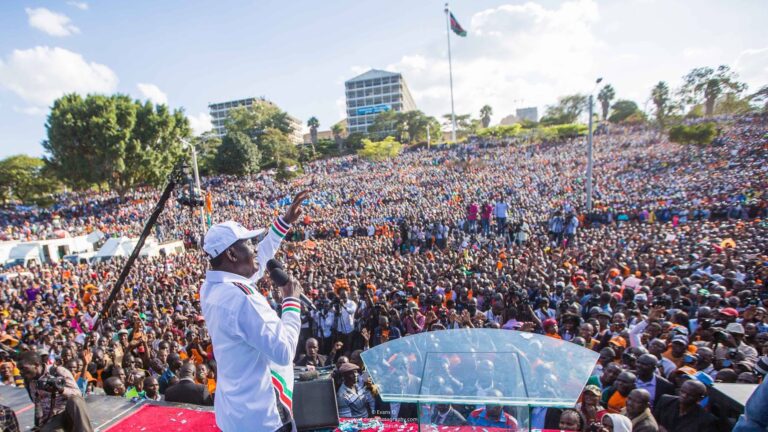
Raila was more than the leader of the Orange Democratic Movement (ODM). For decades, he occupied a unique position in the Luo political imagination, connecting the community’s historical memory to its contemporary struggles for representation, democratic reform and a fair share of national power. He was, in many respects, the principal interpreter of Luo political interests to the rest of Kenya and the most recognisable embodiment of the community’s political voice.
Yet it would be a mistake to conclude that Luo unity began with Raila, or that its survival depends entirely upon the fortunes of ODM. The foundations of that unity are older, deeper and more complex. Rooted in shared language, kinship, cultural institutions, collective memory and a long history of adapting to political and economic change.
The passing of Raila therefore presented the Luo nation with a dual responsibility. To honour a political inheritance without becoming imprisoned by it, and to preserve the unity that made the community influential while preparing that unity for a different historical age. It is against this larger canvas that the state of the Luo nation must be assessed.
The historical foundations of Luo unity
To understand the contemporary Luo political condition, one must begin with the character of Luo society before colonial rule.
Pre-colonial Luo communities were organised through households, lineages, clans and settlements, with authority exercised through elders, family heads, respected community figures and other institutions shaped by local circumstances. Political authority was not concentrated in a single centralised state comparable to the kingdoms that emerged elsewhere in the region. Social cohesion instead rested upon relationships of kinship, mutual obligation, customary law, shared cultural practices and the capacity of communities to organise around common interests.
This structure did not mean that Luo society was without disagreement or rivalry. Indeed, competition between lineages and settlements was a feature of many pre-colonial African societies. What sustained the Luo collective identity was the existence of cultural and social bonds that made cooperation possible across them.
This distinction remains relevant today. Unity has never required every Luo to hold the same political opinion. It has required an understanding that political disagreements do not erase a shared historical inheritance or the need to advance common interests.
The colonial encounter transformed these older relationships. Missionary education, wage labour, urban migration, the emergence of new African elites and the introduction of colonial administrative structures altered the ways in which Luo communities organised themselves. Men and women moved beyond their ancestral settlements in search of education, employment and commercial opportunity, creating new social networks across Kenya and East Africa.
Out of this transformation emerged the Luo Union.
Established in Nairobi in the early 1920s and subsequently developed into a wider organisation, the Union sought to bring together Luo people who had previously relied heavily on local and clan-based associations. It offered practical support to people living far from home, including assistance with funerals, education and economic activities. By the 1940s and 1950s, it had become an important vehicle for cultural solidarity and a meeting point for a generation increasingly conscious of its place in the colonial political order. Historical accounts describe the Union’s expansion across East African towns and its growing connection to African nationalism.
The significance of this development cannot be overstated. The Luo Union was an attempt to turn that identity into an organised social resource. This early history also reminds us that Luo collective advancement was never conceived exclusively in electoral terms. Welfare, education, enterprise, cultural preservation and political representation were interconnected concerns. That is an important lesson for the present generation.
The historical record also demands that the story of Luo organisation be told beyond a handful of celebrated political personalities. Figures such as B.A. Ohanga, Walter Odede, W.W.W. Awori, Achieng Oneko and Paul Mboya, alongside Jaramogi Oginga Odinga and other community builders, belong to a wider history of political organisation, public service, education and institution-building. Their contributions illuminate a tradition in which collective advancement depended upon many kinds of leadership, not simply the individual who eventually occupied the national political stage.
The Luo Union’s original spirit of Riwruok e Teko — unity is strength — must therefore be understood in its fullest sense. Unity was intended to enable people to accomplish together what they could not easily accomplish separately.

From Jaramogi to Raila
The rise of Jaramogi Oginga Odinga marked a decisive transition in the relationship between Luo collective organisation and national politics.
Jaramogi emerged from a generation that understood independence as a struggle over the ownership of political power, economic resources and the meaning of freedom itself. His political career, including his service as Kenya’s first Vice-President and his subsequent opposition to the direction taken by the post-independence Jomo Kenyatta state, established a tradition of dissent that became central to the Luo political experience.
For many Luo households, the historical memory of Jaramogi came to represent the willingness to challenge authority when the distribution of national power appeared unjust. That tradition was reinforced by the assassination of Tom Mboya in 1969, the detention and harassment of political figures, and the long periods of confrontation between the community’s leading opposition voices and the state.
These experiences helped shape a political culture in which national questions — democracy, constitutionalism, political pluralism and the distribution of public resources — were closely connected to the community’s own experience of power and exclusion.
Make no mistake, the Luo political story was never exclusively one of resistance. It also involved participation in national institutions, trade unions, education, public administration, business and the struggle to expand opportunities for African advancement. Jakom Raila Odinga inherited this complicated political tradition. He also transformed it.
His rise unfolded during the struggle against one-party rule, the restoration of multiparty politics, the constitutional reform movement and the political realignments that followed the 2002 election. He became a central figure in the 2007–2008 post-election crisis and the subsequent reform process, eventually serving as Prime Minister from 2008 to 2013. His presidential campaigns repeatedly placed him at the centre of national debates over the structure of government, electoral credibility and the distribution of power.
For Luo politics, Raila’s most consequential achievement was his ability to preserve a recognisable collective political identity while repeatedly negotiating alliances that extended beyond the community. Amolo understood that the Luo electorate, by itself, could not determine the outcome of a national election. Yet he also understood that a politically organised community could exercise considerable influence when it entered national coalitions with a clear identity and a coherent set of interests.
This was the central paradox of Raila’s political method where he needed a united Luo political base, but his national ambitions required him to build bridges beyond it. His repeated insistence that Luos were one people served as a means of maintaining that collective identity through changing alliances, electoral defeats and political disagreements.
The question now is whether the community can preserve that cohesion without relying on a single individual to continually renew it.
The post-Raila transition: Oburu Oginga and the continuity of ODM
When Raila died, many observers anticipated a fierce contest over the leadership of ODM. The party had been built around his political authority, national stature and ability to hold together leaders whose ambitions and ideological positions did not always coincide.
Such expectations were understandable. Historically, political parties in Kenya have frequently struggled to manage succession when their founding or dominant personalities depart the stage. KANU, Ford Kenya, PNU.
Yet ODM’s initial transition demonstrated the value of institutional continuity. Dr Oburu Oginga, Raila’s elder brother and a veteran politician in his own right, emerged as the senior figure around whom the party could organise its immediate post-Raila leadership.
His elevation provided ODM with a point of continuity as the party prepared for the formal processes through which its members would determine its long-term leadership. He has performed examplary well with his two Deputies, Simba Arati and Abdulswamad Nassir.
Oburu’s task is nevertheless different from Raila’s. His challenge is not to reproduce his brother’s personality or political style but to demonstrate that ODM can function as an institution governed by structures, rules, collective decisions and a recognisable political programme.
His approach to party discipline, organisational order and the continuation of the broad-based political arrangement associated with Raila’s final period in public life has helped define the early phase of this transition.
For the Luo nation, ODM remains a major vehicle through which the community has participated in national politics. But the party’s future and the broader unity of the Luo people are related without being identical. A party can experience internal disputes without an entire community losing its cohesion. Equally, a community can remain culturally united while its members support different political parties.
This distinction will become increasingly important as the Luo political landscape develops beyond the era of Raila Odinga.
The Luo nation and the Ruto administration: Representation, access and accountability
The emergence of Dr Raymond Omollo as one of the most visible Luo figures within President William Ruto’s administration introduces another important dimension to the post-Raila political equation.
As Principal Secretary in the State Department for Internal Security and National Administration, Omollo occupies a position through which national government coordination, administrative services and internal security functions intersect. His office gives him access to an extensive administrative network, including the structures through which government services reach citizens.
Among the Luo community, his role has attracted attention because it represents a form of political influence that operates outside the familiar arena of elected office. Omollo’s proximity to the centre of government has been an opportunity to address practical concerns affecting families, young people and communities across Luo Nyanza.
The unfinished economic question
Perhaps the greatest danger facing the Luo nation is the temptation to measure its condition almost entirely through electoral influence and political appointments.
A community can command considerable attention in national politics while large numbers of its people continue to struggle with unemployment, household debt, insecure livelihoods and limited economic opportunity.
Political visibility is not the same as economic transformation.
Luo Nyanza possesses important assets, including Lake Victoria, agricultural land, urban commercial centres, educational institutions, a substantial professional population and an extensive diaspora. These assets create opportunities in fisheries, aquaculture, agriculture, tourism, transport, manufacturing, education, digital services and cross-border trade.
Lake Victoria sustains livelihoods across the region, but the long-term benefits of the lake depend on sustainable management, improved storage and processing, reliable market access, modern equipment and stronger value chains. Perhaps this is why there is a renewed vigour by the Ruto administration to revive the Lake economy. Ongoing construction of the Lake Victoria ring road and piers in the region. The same applies to agriculture, where farmers can now grow rice in areas like Nyatike, while sugar cane farmers are starting to see the benefits of sugar cane farming.
From the politics of inheritance to the politics of institution-building
One year after Raila Odinga’s death, the Luo nation remains a significant participant in Kenya’s political life. ODM continues to provide an important organisational platform, Dr Oburu Oginga occupies a central place in the party’s transition, and Luo figures serving in government have opened additional channels through which the community can engage the state.
These developments are important, but they do not settle the larger question of the Luo nation’s future.
The true measure of the post-Raila era will be whether the community can convert its historical cohesion into durable institutions, economic advancement and a more deliberate strategy for participating in national affairs.
The generation that built the Luo Union understood that solidarity required organisation. Jaramogi understood that political independence did not automatically guarantee equality. Raila understood that a community needed both a coherent political identity and alliances beyond its immediate boundaries.
Each generation confronted a different historical problem. The present generation must now confront its own.
The Luo nation has a long history of adapting to changing circumstances while preserving a recognisable cultural identity. Its future will depend on whether that capacity for adaptation can be directed towards a new programme of institution-building, economic cooperation and intellectual renewal.
Raila Odinga’s legacy will remain part of that story. But the future of the Luo nation must be written by the collective efforts of its people. For the Luo Union, the task is therefore both historical and contemporary. To preserve the memory of a people, examine the choices before them and help create the institutions through which their shared aspirations can be realised.
The enduring lesson of Riwruok e Teko is that strength must be put to work. The next chapter of Luo history should be defined by the opportunities it creates, institutions it sustains, and the dignity it secures for generations yet to come.